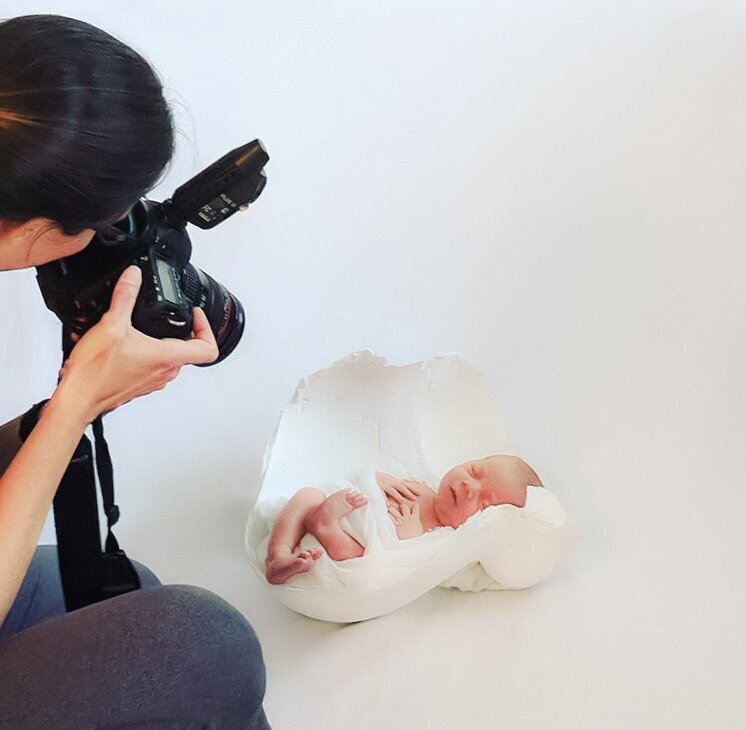

Last month I wrote about the wall in your next house that doesn’t exist yet — and why waiting for the forever home to commission newborn art costs families the moment. This month I want to tell you about the other window most parents don’t know about until it’s already closing.
Newborn photography has a genuine biological window. It’s measured in days, not months. And it’s the one part of newborn planning I can’t stretch, no matter how much any of us would like to.
What the window actually is
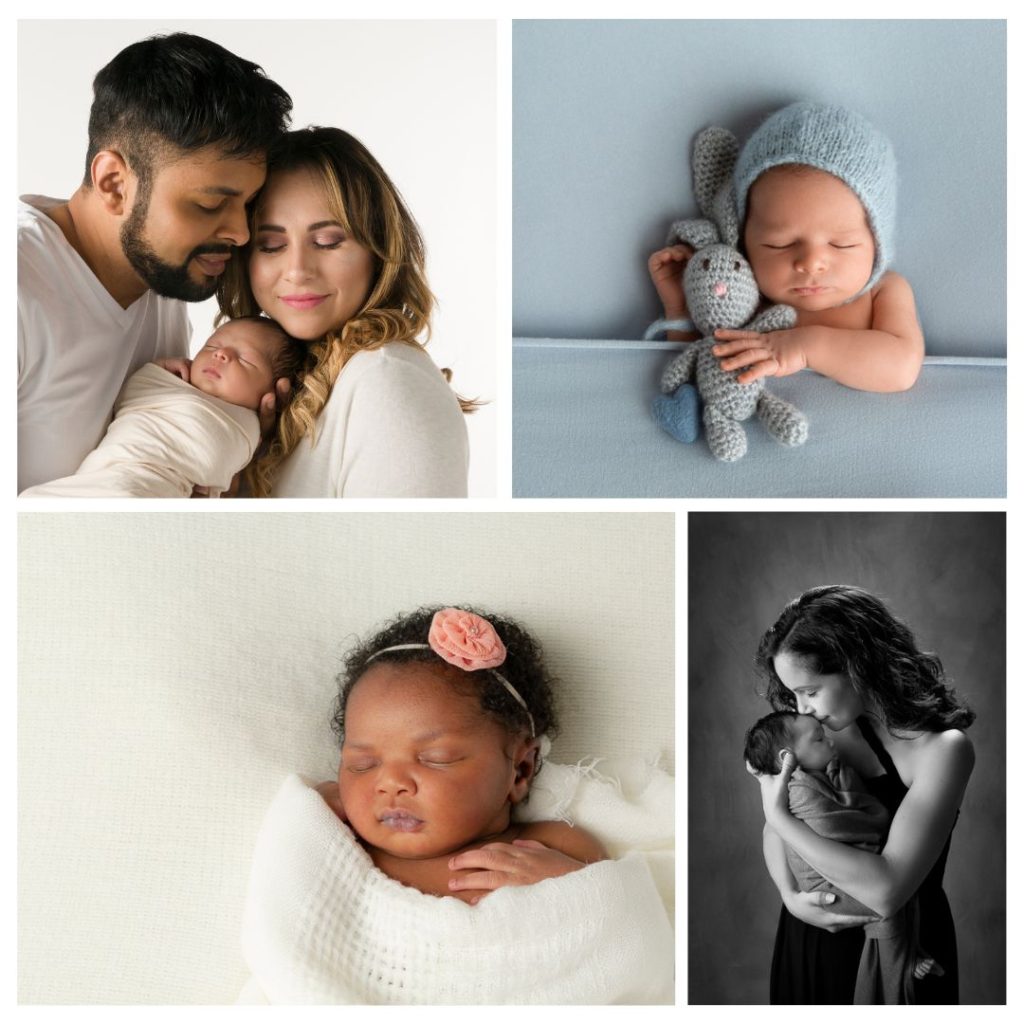
The images most families picture when they think of newborn portraits — the curled, sleepy poses, the wrapped-up-tight setups, the delicate curve of a baby folded into the shape she held in utero — those images are possible because the baby is still doing what she did before she was born. Still sleeping deeply. Still curling. Still perfectly, impossibly new.
That specific state has a shelf life.
The sweet spot for most newborns falls somewhere between days 5 and 14. She’s home from the hospital, feeding rhythms are starting to settle, and she’s still soft and sleepy in the specific way that lets us shape a session around her. Days 5 through 14 is our comfortable working window. Past day 14, the state we’re working with begins to shift.
What changes as the window closes
By two weeks in, most babies begin to stretch and unfold. They spend more time awake and alert. The classic sleepy, curled poses take longer to capture because the baby is doing less of the work — she isn’t naturally settling into those shapes anymore, so I have to work harder and longer to help her get there. Sessions run longer. More aware of her surroundings and she has opinions about that. Some poses simply don’t happen.
By three or four weeks, jaundice has usually resolved (which is beautiful — those first weeks are when it’s most visible) and the umbilical stump has fallen off. Both good things for her; both changes to what a portrait will look like. Skin tone shifts. Sleep patterns become less predictable. Baby acne can appear as well as cradle cap.
None of this is a problem, exactly. It’s just different. Older babies photograph beautifully in their own way — bright-eyed, connecting with the camera, showing more of their emerging personality. But if what you want is newborn portraits — that specific first-days softness — the window for those is shorter than most families expect.

What happens if you miss the window
I want to be honest with you here, because I hear this question from families who found me late or whose babies arrived unexpectedly early or late.
If you miss the newborn window, you have not missed everything. Your baby will still be beautiful. Different portraits are possible — sitter sessions at six or seven months, first birthday portraits, family sessions at every stage. They aren’t the same as newborn portraits. They’re their own thing, and they’re wonderful.
But they aren’t a substitute for the first-days images. If those images matter to you, planning for them ahead of time is how they happen.
How we plan around it
Here is the part that surprises most first-time parents: newborn photographers book their sessions during pregnancy, not after the baby arrives.
That’s because I can’t guarantee availability in your specific five-to-fourteen-day window if you call me the week your baby is born. What I can do is hold your window flexibly during pregnancy — you book with me in your second or early third trimester, and when your baby arrives, you call or text me, and we schedule the session within the right window. The date isn’t set until baby is here. Only the promise is.
That’s how the concierge model handles a moving target. You don’t have to know your baby’s birthday. You just have to know you want the portraits. Because realistically I have a limit if I hit that limit I won’t guarantee your spot. I’d have to say those dates are full.
For preemie families
Everything I’ve just written assumes a full term baby. Preemie families work differently, and I want to speak to you directly because this is personal for me — my own son was a preemie, and the standard “first two weeks” advice never quite fit our story either.
For preemie families, the window isn’t a formula. Your baby’s developmental age, gender, time in the NICU, feeding progress, and what “settled” means for your specific baby all shape when we should schedule the photography. No two preemie stories are the same, and blanket rules don’t serve you. What I offer instead is a conversation. Once you know your baby is coming home — or once she’s home and thriving — we talk. We schedule around your baby’s needs, not around a calendar rule.
You are not late. You are not behind. Your window is yours.
For twins, high-risk deliveries, and every other unique situation
The concierge model exists exactly for these situations. Twins can be photographed together as soon as everyone is home and healthy. High-risk deliveries, C-section recoveries, extended hospital stays — none of it disqualifies you. Once everyone is home from the hospital, we plan the session around your family’s actual state, not a textbook window.
You bring me the situation you’re in. I plan the session around it. That’s the whole point of doing it this way. If you are booked in on my calendar we will make it work for your specific needs. When I say my calendar is full that means I’m here for those clients regardless of the expected arrival time I’ve got flexibility to accommodate my “babies”
What I hope you take from this
Not urgency. Not pressure. Just this: newborn portraits have a real window, and the families who don’t want to miss it are the ones who plan for it during pregnancy — not the ones who wait to figure it out after the baby arrives.
Book during pregnancy. Hold your spot. Let me handle the rest.
Charlotte and Fort Mill newborn portrait sessions are booked one family at a time. Reach out when you’re ready — we’ll start with a conversation.
Next month: the photograph you cannot retake.